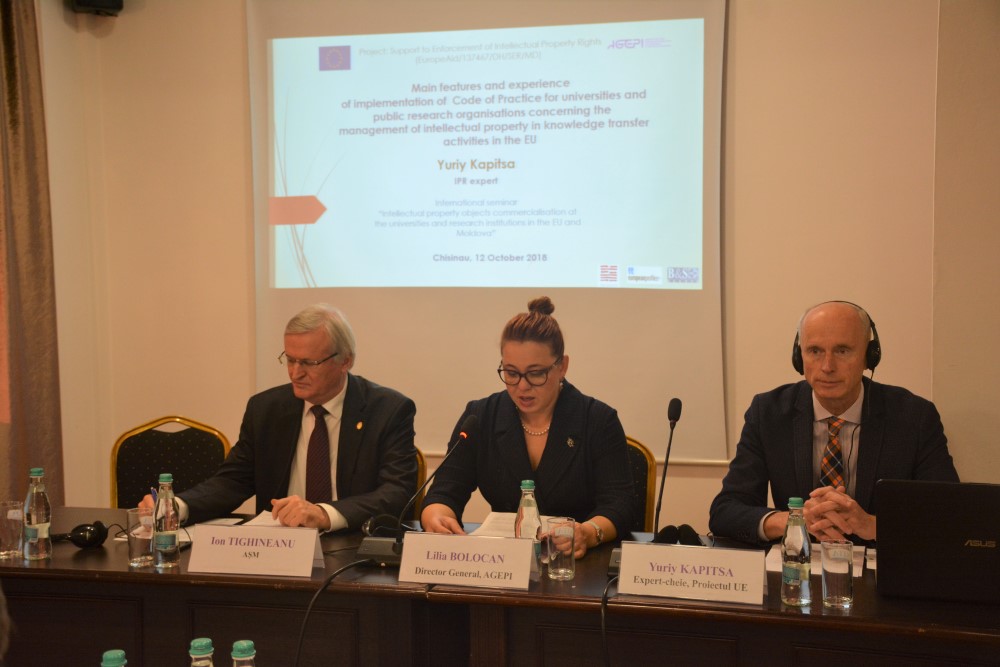
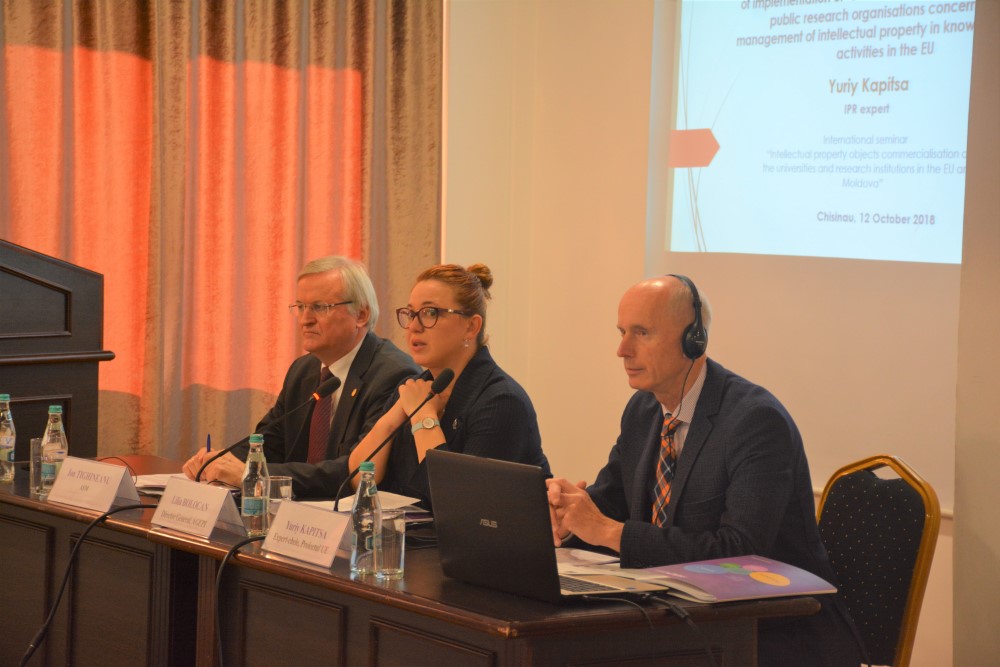
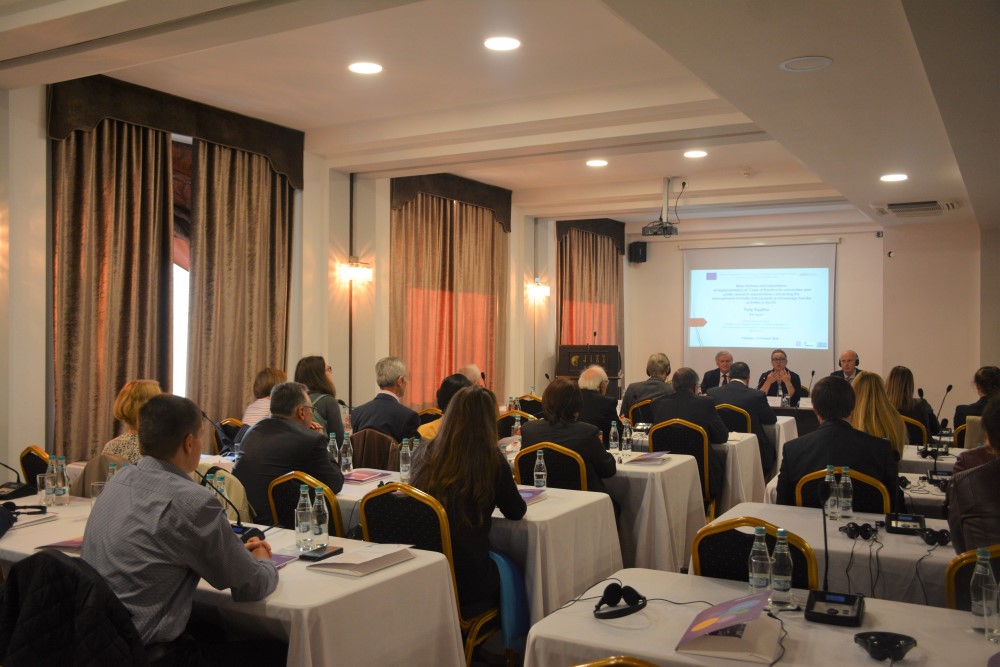
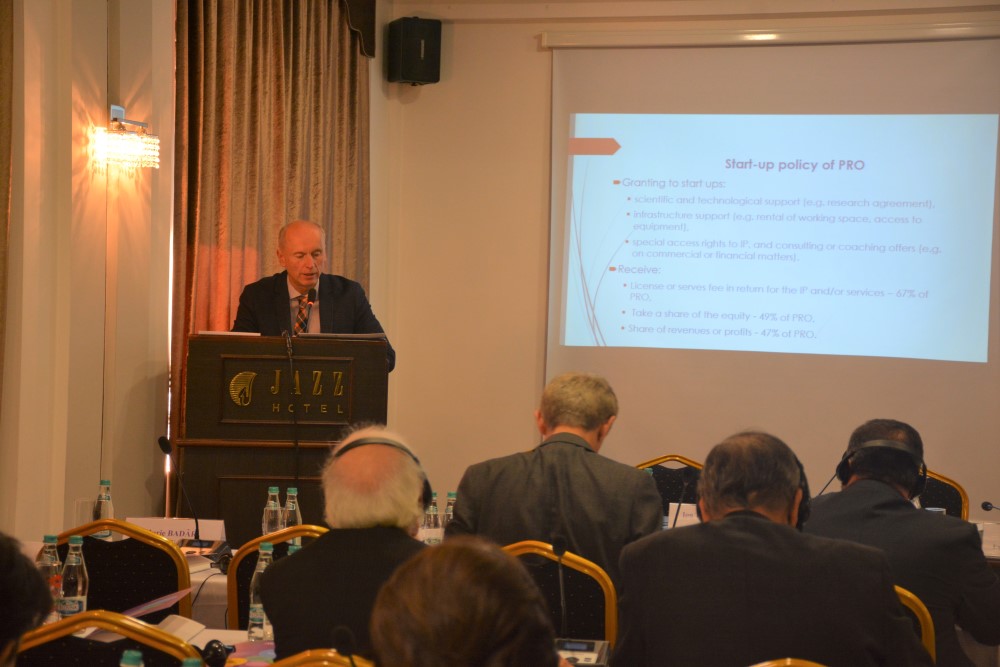
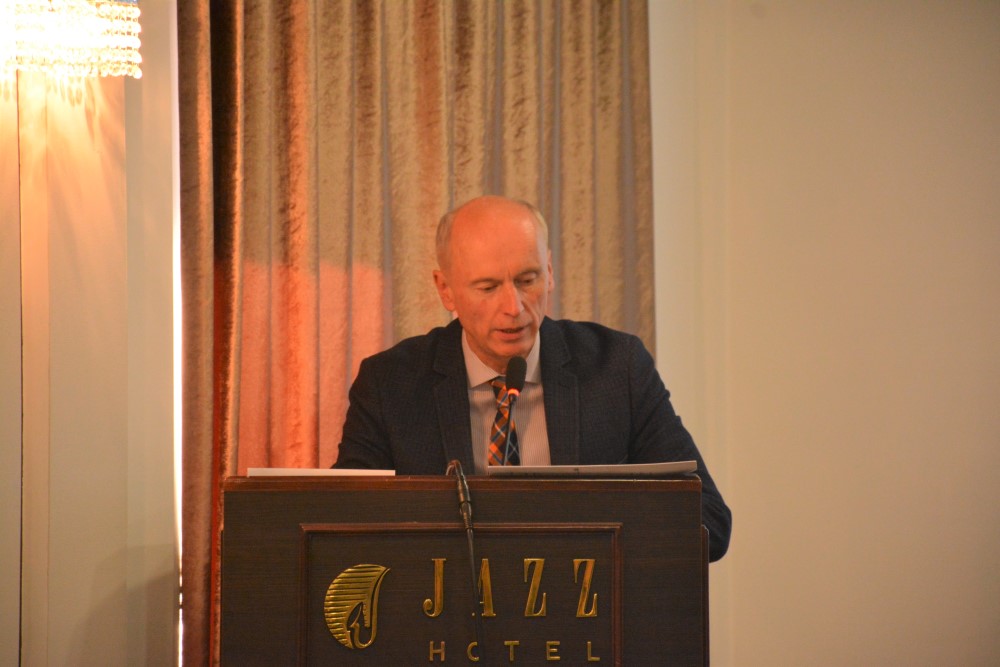
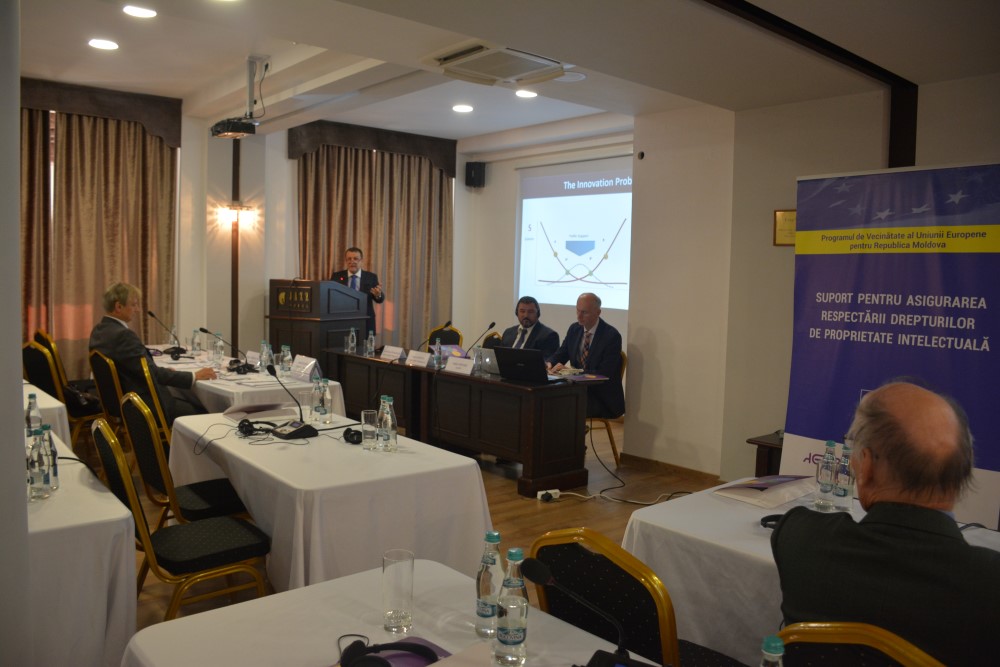
How may commercialise the intellectual property objects (IPO), created within Moldovan universities and research centers, what are the challenges at national level and what solutions do the European practices offer? These and other aspects of the management and commercialization of IOPs in higher education institutions and research centers were discussed at an international seminar organized by AGEPI and the EU Project "Support to Enforcement of the Intellectual Property Rights" in the Republic of Moldova, on 12th October 2018.
The Director General of AGEPI, Ms. Lilia Bolocan, opened the seminar by speaking about the importance to training specialists in IP field, transferring knowledge and technology for economic development. "The seminar will help universities and research institutions with valuable information from national specialists and international experts on Intellectual property objects protection, management and commercialization. Universities should encourage the transfer of knowledge, economic application of research results for public benefit", Ms. Lilia Bolocan noted.
Mr. Maximilian Foedinger, the EU Project Team Leader mentioned that innovation and technology are changing the world. In order to improve the competitiveness of companies in this changing world, to create long-term economic growth and new jobs, each country needs to invest in research, innovation and training. Also, the expert presented state mechanisms to supporting research and commercialization of intellectual property objects in the EU, applied by Austria and Germany.
According to expert, the Austrian system for supporting business with IPO has three levels: Austrian Chamber of Commerce provides basic support to founders, the Technology Center supports innovative SMEs and an important support is going to ”academic” foundations. Austrian companies also benefit by a series of state support tools to finance innovative projects such as grants, loans, guarantees, tax incentives. Regarding Germany's case, Maximilian Foedinger mentioned that this country is investing heavily in research and innovation and develops new tools to finance it. One of its main policies is the High-Tech Strategy, with an expanded concept of innovation that includes not only technological innovation but also social innovation – and that includes society as a central player. To support innovative SMEs, German state gives grants up to € 100,000.
Mr. Ion Tighineanu, Deputy Chairman of Moldovan Academy of Sciences said that capitalizing scientific results of research is becoming more important as it is a source of development for different economic and social sectors and provides resources for the resumption of research cycle at a higher level than its income from cooperation with industry or with society.
The EU Project Expert, Mr. Yuriy Kapitsa, referred to the Code of Practice applied by EU universities and public research organizations in intellectual property management and knowledge transfer. According to the expert, the document was approved by the European Commission in 2008 and aims to improve the management of intellectual property, knowledge and technology transfer. Mr. Yiuriy Kapitsa noted that universities and research organizations should adopt internal documents on intellectual property policy and knowledge transfer, including rules for the staff and students regarding the disclosure of new ideas, the ownership of research results, terms on transfers of IPR etc.
The professor, Mr. Iurie Badir spoke about intellectual property management within university and research institutions, referring to initiatives and constraints to stimulate IPO commercialization. According the expert, promotion of IP will be more effective if AGEPI develops regulations for enterprises/ institutions on IP management, innovation management will be included in the core national policy documents, the IP Institute will be created, PI management and innovation will be incorporated into university programs, promotional campaigns, seminars, conferences etc. will be organized.
The event were attended by circa 70 representatives of academic institutions in the country and international experts.
The EU Project ”Support to Enforcement of the Intellectual Property Rights” in the Republic of Moldova is funded by the European Union and implemented by a Consortium of Archidata LLC (Italy), European Profiles S.C. (Greece) and Business and Strategies in Europe (Belgium). The project has a duration of two years and ends in November 2018.