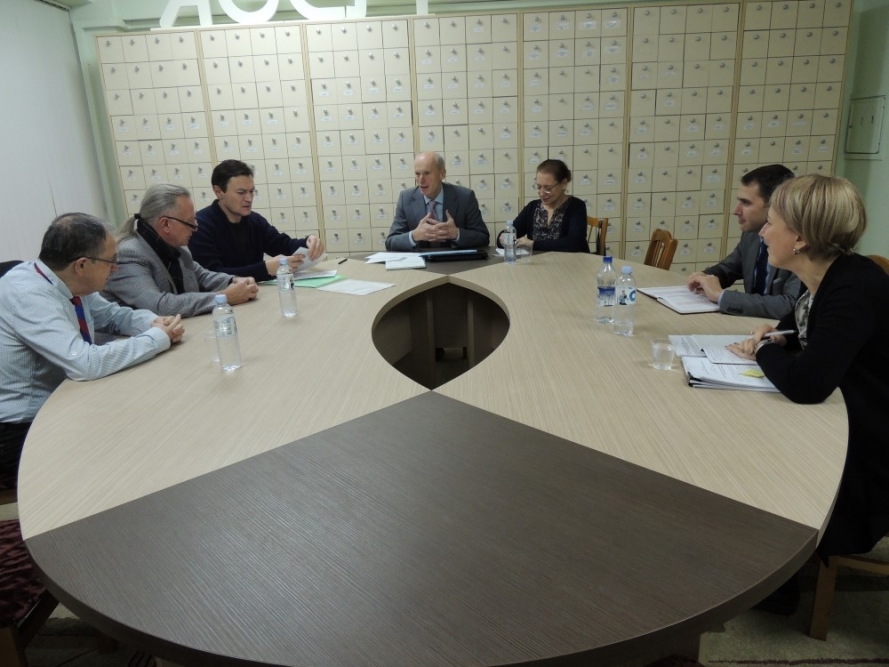
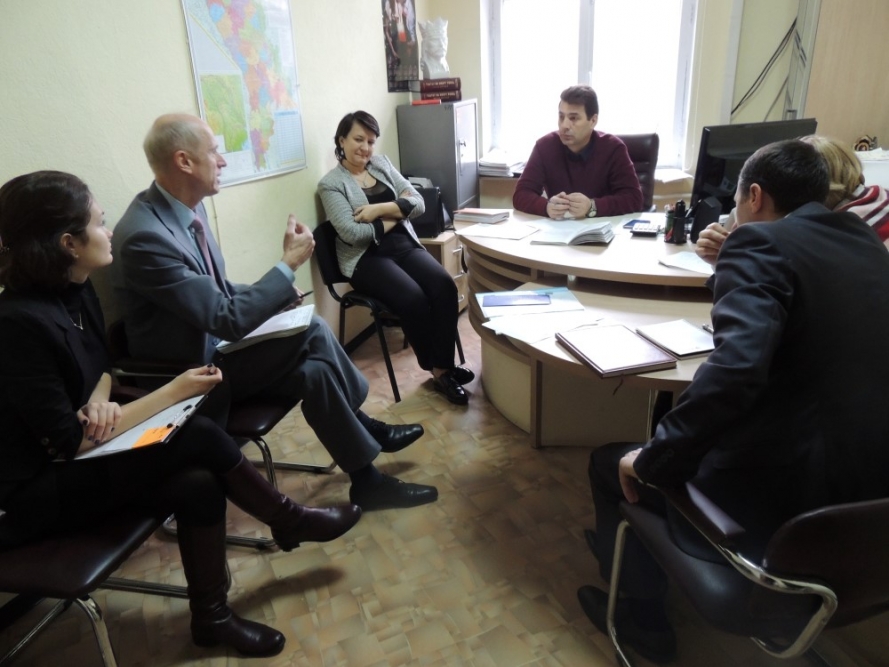
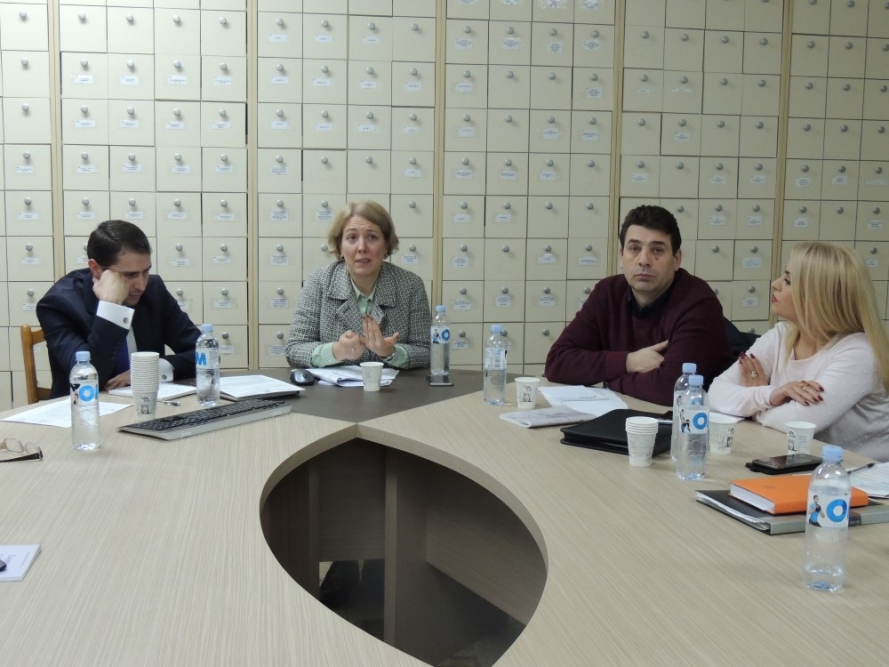
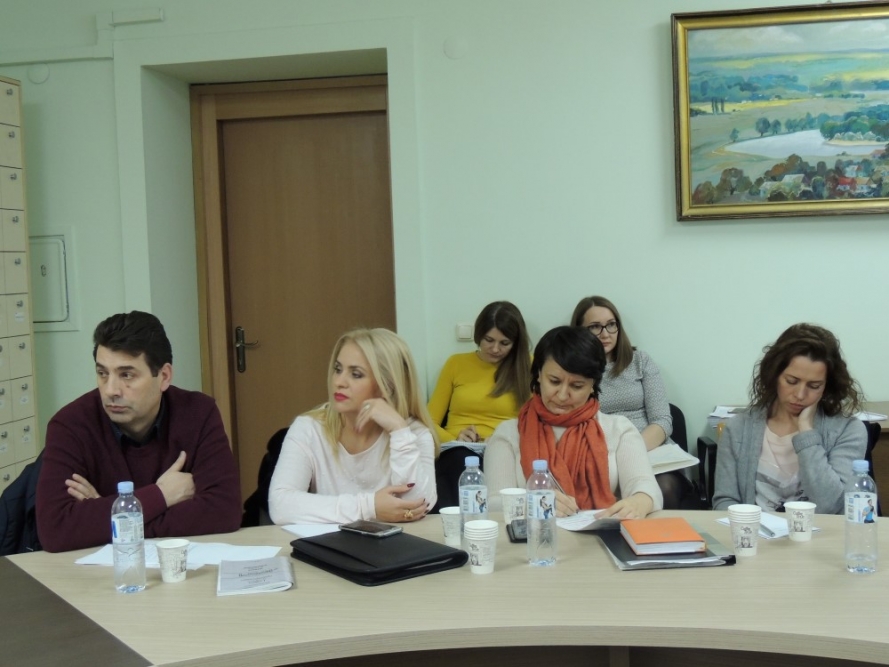
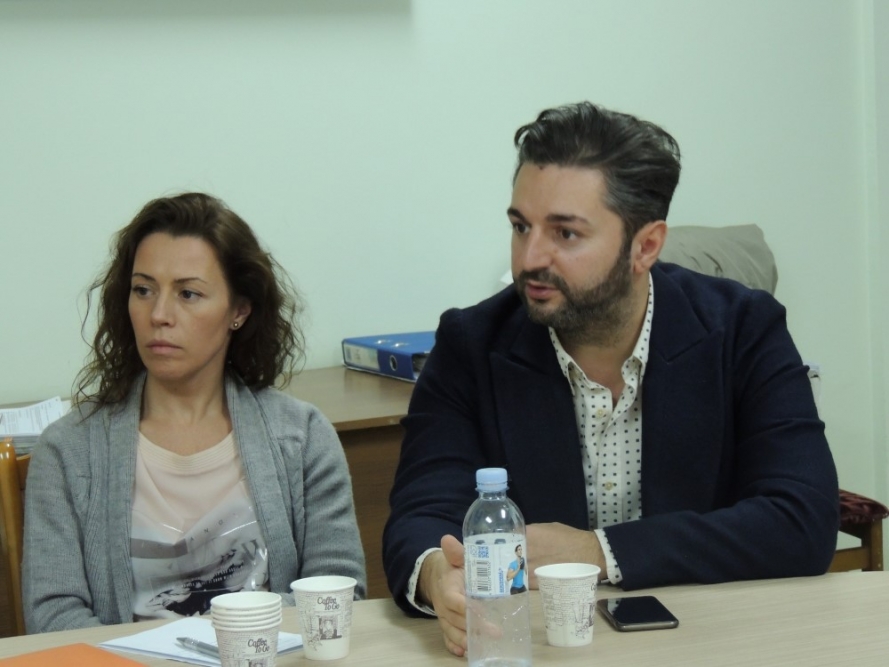
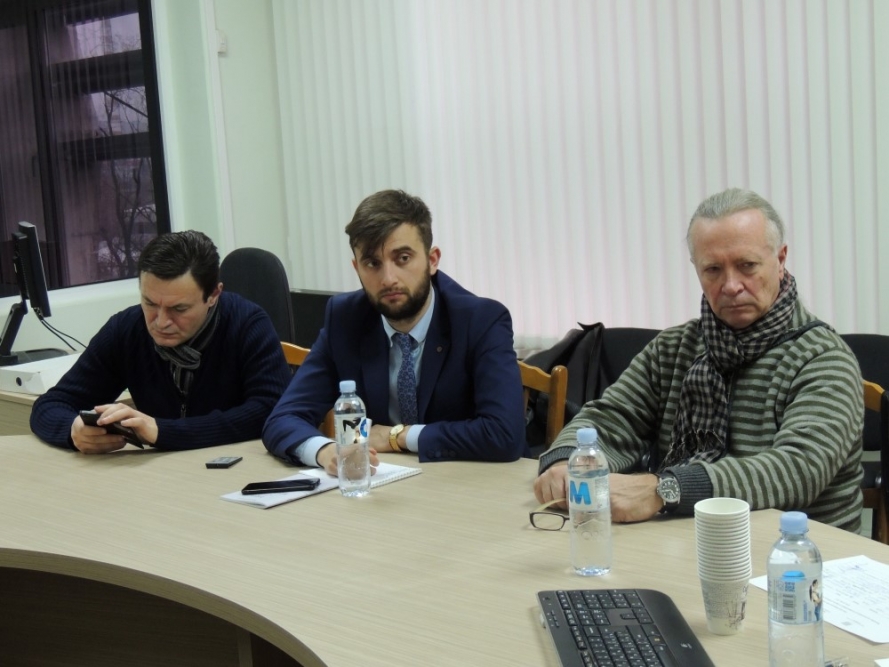
How harmonized is the legislation of the Republic of Moldova with the provisions of Directive 2014/26/EU of the European Parliament and of the Council of 26 February 2014 on collective management of copyright and related rights? How can the collective management work be improved? When will we have a unique collector? Answers to these questions will be found in the next few months by experts of the EU funded project “Support to enforcement of the intellectual property rights”, Irina Lucan-Arjoca, Deputy General Manager of ORDA Romania and the lawyer Ion Tiganas. In order to find out more, the experts, coordinated by Yuriy Kapitsa, met with representatives of the Collective Management Organizations (CMO) of Moldova and the AGEPI specialists from November 27 to 29.
"After the new law on copyright is adopted, all collective management organizations in Moldova will have to change their internal documents to be in line with European standards. So, we had these meetings to see what the real situation is and after the expert will collect the necessary information, they will evaluate the way in which collective management organizations work", said Yuriy Kapitsa, project expert.
According to the European Directive, "Collective management organisations play, and should continue to play, an important role as promoters of the diversity of cultural expression, both by enabling the smallest and less popular repertoires to access the market and by providing social, cultural and educational services for the benefit of their rightholders and the public”.
"European rules have made the rightsholders and collective management bodies more accountable, and these parties are today much more aware of their rights and obligations. In Romania, for example, there is a charge everyone pays for and that’s all. We do not have a minimum or maximum rate that users should pay to collecting organisations. In Moldova, however, I didn't found in the existing laws a calculation methodology or the information the user has to present monthly. Unfortunately, I have noticed that a number of provisions of the 2014 Directive are not transposed in the legislation of the Republic of Moldova", declared the expert Irina Lucan-Arjoca.
Recently, AGEPI proposed for public consultation the amendment of the Law on Copyright and Related Rights. The bill governs rights holders and sets out how collective management will take place. Thus, OGC will not be able to charge more than 20% to cover the costs of collecting salaries and 10% to cover the costs of distributing and paying remuneration. The current law stipulates that collecting organisations retain their rights to manage the rights when allocating the accumulated remuneration.
"I do not see the necessity of amending the copyright law, and in particular Article 50, which provides for the setting of tariffs. In seven years there has been no proposal to change the law, and now things are in a hurry and I'm afraid that chaos will be created", believes Valeriu Rosca, director of the CLAD (Right Management and Licensing Center).
"Every organization wants to work better, especially taking into account European standards. This change will provide both a guarantee for AGEPI, but also for us to become more transparent and accountable", says Olga Belei, director of the Republican Copyright Office (ORDA).
In turn, Liviu Stirbu, president of the National Copyright Association (ANCO), states "We encourage all activities and recommendations that could enhance our organization's work, but we do not know on the basis of which legislative document to do so - based on existing law or the bill. We are totally dissatisfied with the proposed new rules. There are some provisions that have not changed since 2004, but the author's remuneration has been calculated since 2001".
For a better knowledge of European legislation, a workshop was organized on 29 November, where Irina Lucan and the representatives of the OGC discussed the principles of Directive 2014/26/EU, the challenges of this document, Romania's experience in its implementation, and the need to take some steps to improve the collective management activity in our country.
"Collective management organisations need to develop some internal rules and policies. These documents can become a good basis for negotiation and will provide transparency to the users and to the partners with whom they collaborate", recommends the project expert Ion Tiganas.
The team of experts will provide support to collecting management organisation in implementing the European Parliament's directive on collective copyright management, and in particular in the development of internal regulations.
…..
Collective management organizations are non-commercial organizations set up by the free association and directly by the holders of copyright and/or related rights. They issue licenses to users; negotiate with users the amount of remuneration and; accumulate, allocate and pay the remuneration to the rightsholders. Currently, two collective management organizations are active in the Republic of Moldova: the National Copyright Association (ANCO) and the Republican Copyright Office (ORDA).
The Technical Assistance project "Support to enforcement of the intellectual property rights" in the Republic of Moldova is funded by the European Union and is implemented by a Consortium led by Archidata Srl (Italy) together with European Profiles SA (Greece) and Business and Strategies in Europe S.A. (Belgium) for a period of 2 years until November 2018.
For more information please contact Ana-Maria Veverita, Junion Non-Key Expert on media, veverita@ipr-moldova.net.